
Gulraiz Center for Brain Health (GCBH)
Expert neurological evaluation, accurate diagnosis, and comprehensive management of Parkinson's disease and related movement disorders — helping you maintain function, independence, and quality of life at every stage of your journey.
Parkinson's disease is a progressive neurological condition caused by the loss of dopamine-producing neurons in the brain — affecting movement, balance, coordination, and over time, cognition and autonomic function. It is the second most common neurodegenerative disease, affecting millions of adults worldwide and requiring lifelong expert neurological management.
Movement disorders extend beyond Parkinson's disease to include a broad spectrum of neurological conditions that cause abnormal voluntary or involuntary movements. Accurate diagnosis is essential — many movement disorders mimic one another, and the right treatment depends entirely on identifying the correct underlying condition.
The earlier Parkinson's disease and movement disorders are identified, the greater the opportunity to optimize treatment, preserve function, and slow progression. Dr. Gulraiz provides the neurological expertise needed to reach the right diagnosis — and the ongoing partnership to manage it with precision.
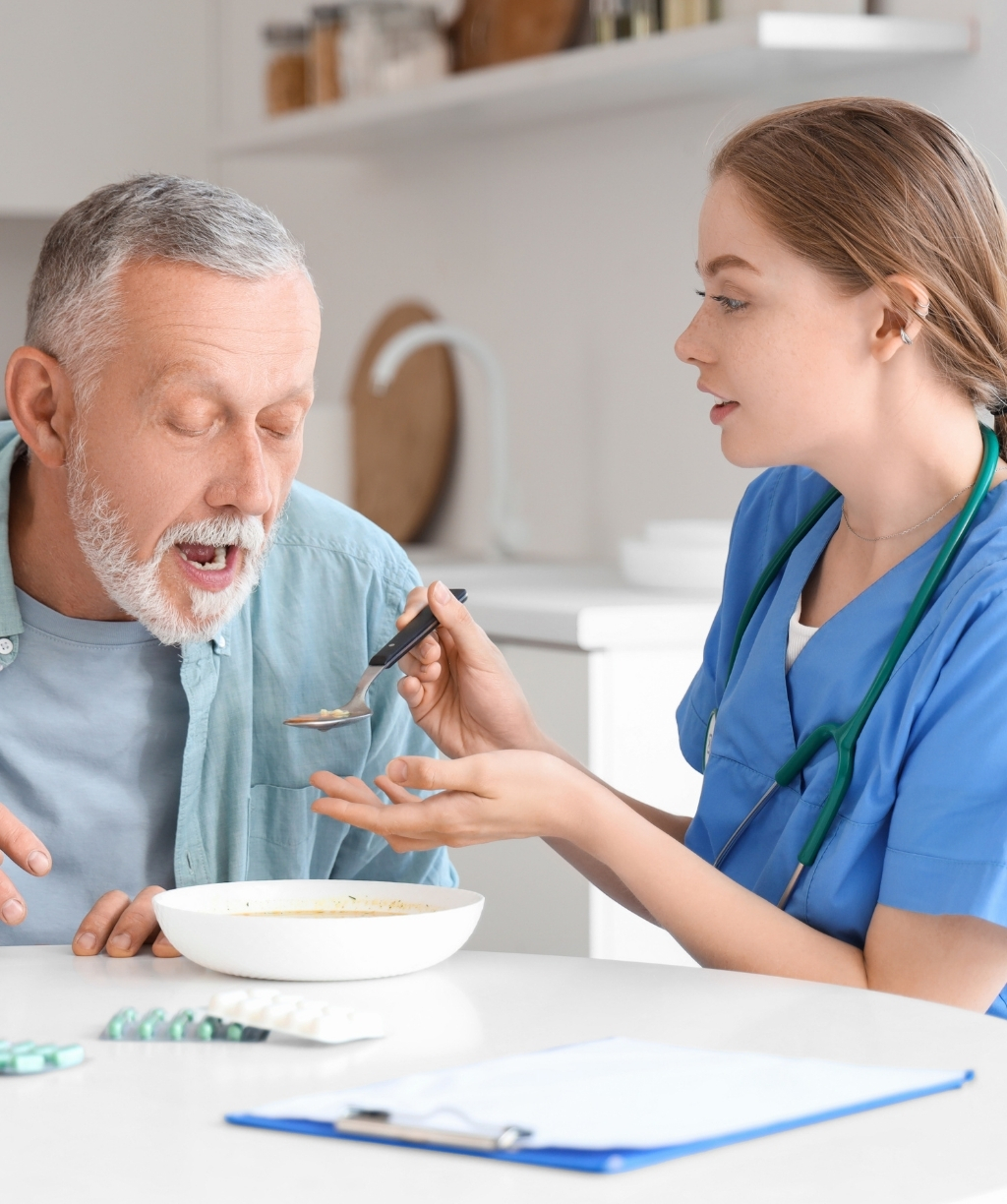
Parkinson's disease and movement disorders present with a wide range of motor and non-motor symptoms. Many of the earliest signs are subtle and frequently attributed to aging — making expert neurological evaluation essential for accurate diagnosis.
A rhythmic shaking of the hand, finger, or foot that occurs when the limb is at rest and typically decreases with intentional movement — one of the most recognizable early signs of Parkinson's disease.
Gradual slowing of all movements — including walking, facial expression, blinking, and fine motor tasks — making everyday activities take significantly longer and feel increasingly effortful.
Increased stiffness or resistance in the muscles of the limbs and trunk — often causing aching, reduced range of motion, and a characteristic cogwheel or lead-pipe quality detected during neurological examination.
Difficulty maintaining balance, a tendency to lean or fall backward, and impaired postural reflexes — contributing significantly to fall risk and representing one of the most disabling features of advancing Parkinson's disease.
A characteristic shuffling gait with small steps and reduced arm swing — along with freezing episodes where the feet feel stuck to the floor — significantly affecting mobility, independence, and safety.
Soft, monotone, or slurred speech — sometimes accompanied by a tendency to trail off or rush words — affecting communication and often one of the earlier non-motor changes noticed by family members.
Progressive shrinking of handwriting over time — letters becoming smaller and more cramped as the patient writes — a subtle but distinctive early feature of Parkinson's disease reflecting bradykinesia of fine motor control.
A masked or blank facial appearance caused by reduced spontaneous facial movement — often mistaken for depression or disinterest, but reflecting neurological changes in the motor control of facial muscles.
Depression, anxiety, sleep disturbances, constipation, loss of smell, urinary dysfunction, and cognitive changes — non-motor features that often precede motor symptoms by years and profoundly impact quality of life.
Acting out vivid dreams during sleep — talking, shouting, or moving in ways that may cause injury — a prodromal symptom that can appear years before the motor features of Parkinson's disease become evident.
Uncontrolled, writhing or twisting movements that can develop as a complication of long-term levodopa therapy — requiring expert medication adjustment to minimize their impact on daily function and comfort.
Early evaluation makes a meaningful difference. Many patients delay seeking care for years after noticing the first symptoms. Dr. Gulraiz provides rapid, accurate diagnosis and an individualized treatment plan that targets both motor and non-motor symptoms — giving you the best possible foundation for living well with Parkinson's disease or a movement disorder.
Dr. Gulraiz applies rigorous neurological expertise to the diagnosis and management of Parkinson's disease and movement disorders — delivering a personalized, evidence-based care plan that evolves alongside your condition and your life.
A comprehensive review of your motor and non-motor symptoms — including onset, progression, triggers, functional impact, prior evaluations, medications tried, and how symptoms affect your daily independence.
In-depth motor examination assessing tremor characteristics, rigidity, bradykinesia, postural reflexes, gait, speech, and facial expression — combined with brain imaging and laboratory review to confirm the diagnosis.
A comprehensive, personalized treatment plan addressing motor symptoms, non-motor symptoms, medication optimization, fall prevention, rehabilitation referrals, and lifestyle modifications tailored to your disease stage and goals.
Ongoing follow-up care to monitor disease progression, adjust medications as symptoms evolve, address new non-motor features, prevent complications, and coordinate with physical therapy, speech therapy, and other specialists.
Parkinson's disease affects the whole family. Dr. Gulraiz welcomes family members and caregivers into consultations — providing education, guidance, and practical strategies to support the patient at home through every stage of the disease.
Receive expert neurological care from the comfort of your home — no referrals, no long wait times, no unnecessary travel. Available across California, Illinois, Nevada, New York, and Washington via secure telehealth.
Our Parkinson's Disease and Movement Disorders program is comprehensive — covering expert diagnosis, personalized medication management, non-motor symptom care, fall prevention, caregiver support, and the ongoing neurological partnership needed across every stage of the journey.
Detailed neurological assessment covering motor symptom characterization, disease staging, non-motor symptom review, functional impact, caregiver burden, and quality of life — establishing the complete clinical picture needed for accurate diagnosis.
Expert motor examination assessing all cardinal Parkinson's features, combined with brain MRI review and laboratory workup to confirm diagnosis, rule out secondary causes, and differentiate between movement disorder subtypes.
Evidence-based initiation, titration, and optimization of levodopa, dopamine agonists, MAO-B inhibitors, and other anti-Parkinson medications — balancing motor symptom control against side effects at every stage of disease.
Comprehensive evaluation and treatment of depression, anxiety, sleep disorders, cognitive changes, autonomic dysfunction, pain, and fatigue — non-motor symptoms that often dominate quality of life and require specialized neurological attention.
Personalized fall risk assessment with targeted recommendations for home safety modifications, assistive devices, physical therapy referrals, and exercise programs — reducing the risk of falls and injury at every disease stage.
Expert management of levodopa-induced dyskinesia and wearing-off phenomena — adjusting medication timing, formulations, and dosing strategies to minimize motor fluctuations and maintain smooth daily function.
Referral and coordination with physical therapists, occupational therapists, and speech-language pathologists specializing in movement disorders — optimizing mobility, speech, swallowing, and daily function alongside medical management.
Receive expert Parkinson's or movement disorder diagnosis from the comfort of your home — no referrals, no long wait times, no unnecessary travel. Available across California, Illinois, Nevada, New York, and Washington via secure telehealth.
Scheduled neurological follow-up visits to monitor disease progression, reassess symptoms, adjust medications, evaluate quality of life, and maintain the long-term clinical partnership essential for living well with Parkinson's disease.
Have a question about Parkinson's disease, movement disorder diagnosis, or your care options? Our team is here with honest, expert answers and genuine compassion.
Parkinson's disease is diagnosed clinically — based on the presence of the cardinal motor features identified during a thorough neurological examination by a trained specialist. There is no single blood test or imaging study that definitively confirms the diagnosis. Dr. Gulraiz evaluates your symptom history, examines your motor function in detail, and uses brain imaging and laboratory studies to rule out other conditions and support the clinical diagnosis.
Essential tremor and Parkinson's disease are commonly confused but are entirely different conditions. Essential tremor typically causes an action tremor — shaking that occurs when the hands are in use — and does not involve rigidity, slowness, or walking difficulties. Parkinson's tremor is predominantly a resting tremor — occurring when the limb is relaxed — and is accompanied by bradykinesia, rigidity, and postural changes. Accurate differentiation requires neurological expertise and significantly changes the treatment approach.
Most Parkinson's disease cases are sporadic — occurring without a clear family pattern and resulting from a combination of genetic susceptibility and environmental factors. Approximately 10 to 15 percent of cases have a clear genetic component, with mutations in genes such as LRRK2, PINK1, and SNCA identified in some families. Dr. Gulraiz discusses genetic risk in the context of each patient's individual and family history and can recommend genetic counseling when appropriate.
Levodopa remains the most effective medication for Parkinson's disease motor symptoms, but over time — usually after 5 to 10 years of therapy — many patients experience wearing-off effects and dyskinesias as the disease progresses. These complications are manageable with medication adjustments, changes in formulation, altered dosing schedules, or the addition of other agents. Dr. Gulraiz monitors for these changes closely and adapts your regimen proactively to maintain the best possible motor control throughout your disease course.
Yes. Dr. Gulraiz provides Parkinson's disease and movement disorder consultations, medication management, second opinions, and ongoing follow-up via secure telehealth across California, Illinois, Nevada, New York, and Washington. Many aspects of Parkinson's care — including medication adjustment, non-motor symptom management, family education, and disease monitoring — are highly effective via virtual visits. In some cases, in-person examination may be recommended, which Dr. Gulraiz discusses transparently with each patient.
Exercise is one of the most powerful non-pharmacological interventions for Parkinson's disease — with strong evidence that regular aerobic exercise, resistance training, and activities like boxing, dancing, and tai chi improve motor symptoms, balance, gait, mood, and cognition. Some research suggests exercise may even slow disease progression by supporting neuroprotective mechanisms. Dr. Gulraiz emphasizes exercise as a cornerstone of every patient's Parkinson's management plan and provides specific guidance on the most beneficial activities.