
Gulraiz Center for Brain Health (GCBH)
Compassionate, evidence-based care for patients and families navigating Alzheimer's disease and other forms of dementia — from early detection through every stage of the journey.
Dementia is an umbrella term describing a decline in memory, thinking, and reasoning severe enough to interfere with daily life. Alzheimer's disease is the most common cause, accounting for 60–80% of all dementia cases. It is a progressive neurological disorder in which brain cells degenerate and die over time.
While dementia primarily affects older adults, it is not a normal part of aging. Early detection, accurate diagnosis, and proactive management can significantly improve quality of life and help families prepare and plan.
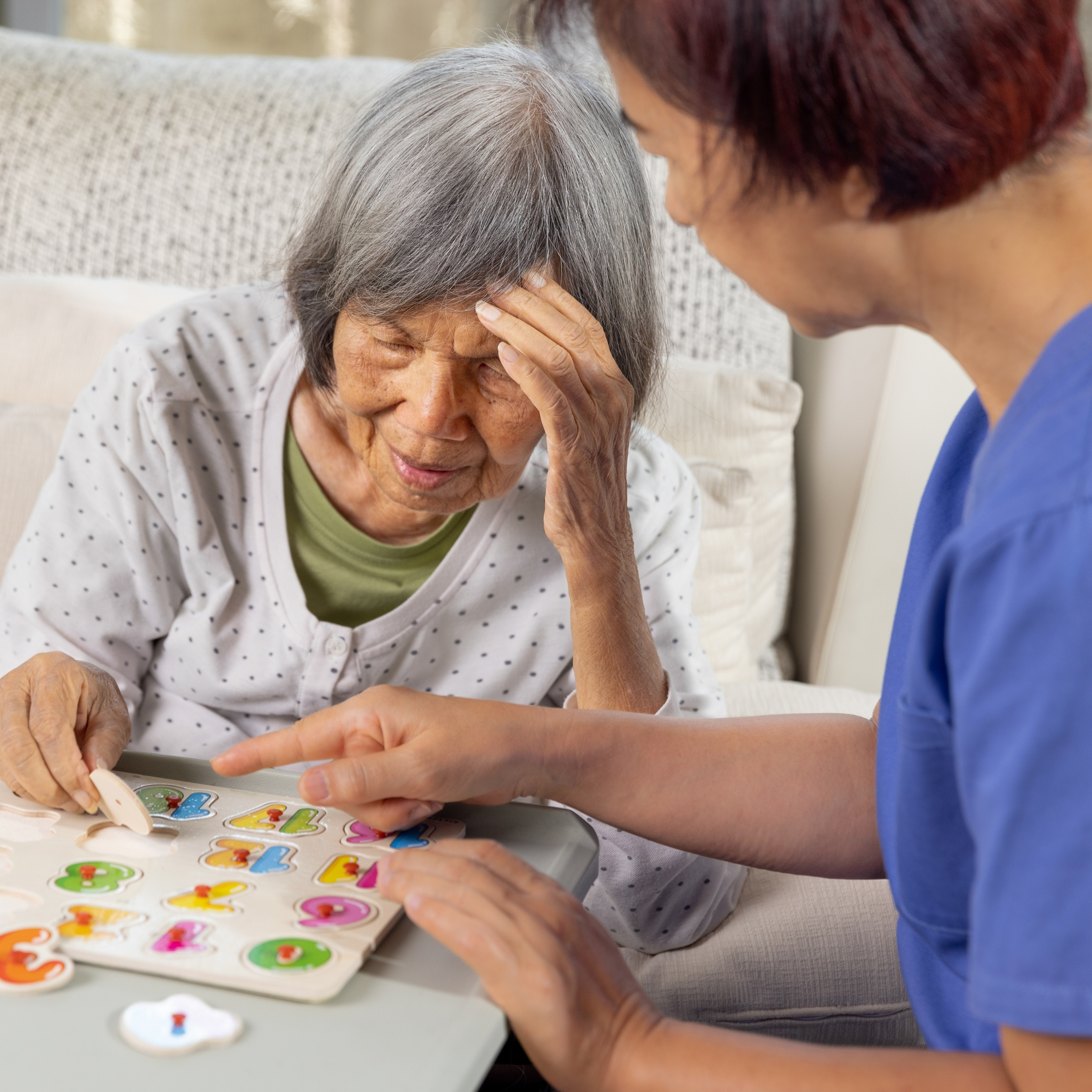
Early recognition of these signs leads to earlier diagnosis — and earlier diagnosis means more treatment options and more time for meaningful planning.
Forgetting recently learned information, important dates, or repeatedly asking for the same information — beyond normal occasional forgetfulness.
Trouble following familiar recipes, managing finances, or concentrating on tasks that involve numbers or sequential steps.
Losing track of dates, seasons, or the passage of time. Getting lost in familiar places or forgetting where they are or how they got there.
Difficulty reading, judging distances, or distinguishing colors — which can lead to problems with driving or navigating familiar environments.
Stopping mid-sentence, struggling to find words, calling things by the wrong name, or having trouble following conversations.
Becoming confused, suspicious, depressed, fearful, or anxious — especially in situations outside of their normal comfort zone.
Removing themselves from hobbies, social events, or work projects due to the changes they are experiencing.
Making poor financial decisions, neglecting personal hygiene, or paying less attention to safety — changes in decision-making ability.
Placing objects in unusual locations and being unable to mentally retrace steps to find them — sometimes accusing others of stealing.
Trouble completing everyday tasks — like driving to a familiar location, managing a budget, or remembering rules of a favorite game.
Sleeping during the day, waking frequently at night, or experiencing significant changes in energy levels and daily routine patterns.
Important: Experiencing one or more of these symptoms does not confirm a diagnosis. Many conditions can mimic dementia symptoms. Early evaluation by a specialist like Dr. Gulraiz is the only way to determine the true cause — and early action gives you the most options for management and care planning.
Dr. Gulraiz takes a comprehensive, multi-stage approach to Alzheimer's and dementia care — combining precise diagnostics with compassionate long-term support for both patients and families.
Thorough neurological exam, cognitive testing, medical history review, and analysis of brain imaging and lab work to build a complete picture.
Identifying the specific type and stage of dementia — because different causes require very different treatment and management strategies.
A tailored plan covering medications, lifestyle modifications, cognitive stimulation strategies, and referrals to supportive therapies as needed.
Regular follow-ups to monitor progression, adjust treatment, support caregiver needs, and ensure dignity and quality of life at every stage.
We involve families and caregivers as active partners — providing education, emotional support resources, and practical guidance on navigating daily challenges at home.
Receive expert neurological care from the comfort of your home — no referrals, no long wait times, no unnecessary travel. Available across California, Illinois, Nevada, New York, and Washington via secure telehealth.
Our Alzheimer's and Dementia Care program is comprehensive — covering every aspect of diagnosis, treatment, family support, and long-term neurological monitoring under one specialized roof.
Complete neurological exam assessing motor function, reflexes, coordination, sensory responses, and cognitive status to establish a full baseline picture.
Standardized neuropsychological assessments measuring memory, attention, language, visuospatial function, and executive cognitive abilities.
Expert interpretation of MRI, CT, and PET imaging to identify structural changes, vascular damage, or protein deposits associated with dementia.
Comprehensive blood work to rule out reversible causes of cognitive decline such as thyroid disorders, vitamin deficiencies, and metabolic conditions.
Evidence-based prescribing and ongoing optimization of cognitive, behavioral, and neuropsychiatric medications — balancing efficacy and safety at each stage.
Dedicated sessions to educate families, address caregiver burnout, and develop a shared understanding of the disease trajectory and care expectations.
Guidance on legal, financial, and medical planning — helping patients and families make informed decisions while the patient can still actively participate.
Receive expert neurological care from the comfort of your home — no referrals, no long wait times, no unnecessary travel. Available across California, Illinois, Nevada, New York, and Washington via secure telehealth.
Scheduled follow-up evaluations to track cognitive change over time, update care plans, monitor medication effects, and ensure quality of life is preserved.
Have a question not listed here? Our team is ready to help — reach out directly and we will provide the guidance you need.
Normal aging may include occasional forgetfulness — like misplacing your keys or forgetting a name temporarily. Dementia involves a consistent pattern of cognitive decline that interferes with daily functioning, social interactions, and independence. If you notice consistent memory problems or personality changes, an evaluation is the first step.
You should seek evaluation if you or a loved one notices increasing forgetfulness affecting daily life, confusion about time or place, difficulty with familiar tasks, sudden personality changes, or getting lost in familiar surroundings. Earlier evaluation means earlier answers — and more options for care and planning.
There is currently no cure for Alzheimer's disease, but FDA-approved treatments can slow cognitive decline and manage symptoms. Early diagnosis allows patients to begin treatment sooner, make meaningful life plans, and access clinical trials for emerging therapies. Dr. Gulraiz stays current on the latest advancements in dementia treatment.
Diagnosis involves a detailed neurological examination, standardized cognitive and memory tests, blood work to rule out reversible causes, and brain imaging such as MRI or CT scans. In some cases, advanced PET imaging may be recommended. Dr. Gulraiz guides patients through the appropriate diagnostic pathway based on their individual presentation.
Yes. Gulraiz Center for Brain Health offers virtual consultations, second opinions, and follow-up care for patients across California, Illinois, Nevada, New York, and Washington. Telehealth is especially helpful for dementia patients and their caregivers who may find travel difficult. Dr. Gulraiz conducts thorough evaluations and provides the same expert care virtually as in person.
Absolutely. We work closely with family members and caregivers — providing education about the disease, guidance on daily care strategies, and support resources to help manage the emotional and physical demands of caregiving throughout the entire journey.